Bagaran—the ancient capital of Armenia in the province of Kars

Bagaran—the forgotten capital of ancient Armenia near the Turkish border

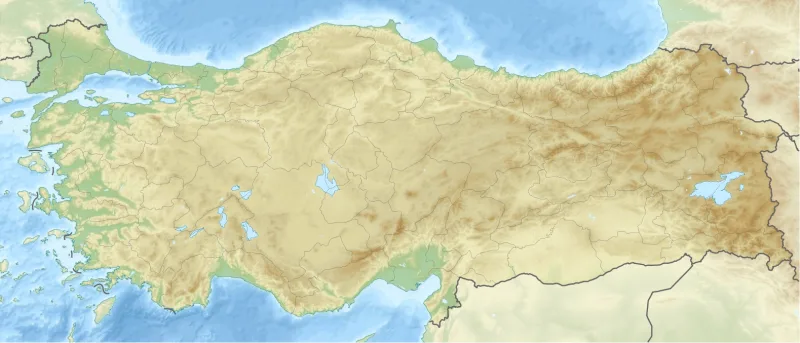
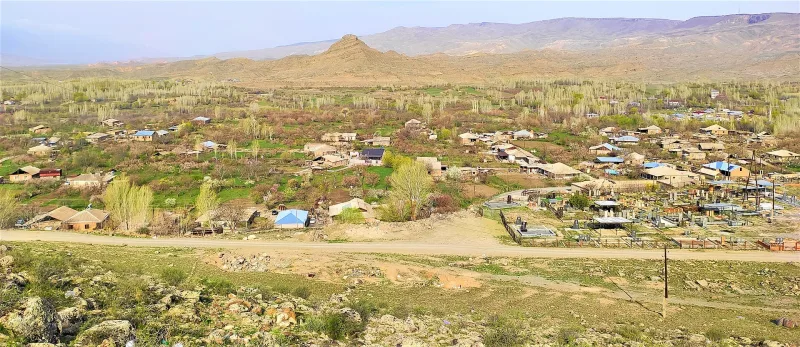
On the very edge of Turkey, where the province of Kars almost touches the Armenian border, in a field by the dry bed of the Akhurian River, stands the small Kurdish village of Kilittaşı. Beneath its houses and gardens lies an ancient city. Bagaran—one of Armenia’s historic capitals, founded in the 3rd century BCE—has today been almost wiped off the face of the earth. The city’s main temple, the Church of Saint Theodore, was destroyed in 1920. Nevertheless, the site itself—a closed border zone, beyond whose river lies Armenia—attracts travelers and historians as a symbol of loss. Bagaran offers neither guided tours nor ruins worthy of a photo album—only a sense of the weight of time and the silence of the former capital.

History and Origins of Bagaran

According to the Armenian historian Movses Khorenatsi, Bagaran was founded in the 3rd century BCE by King Yervand IV (Orontes IV) of the Orontid dynasty. The new city quickly became the country’s spiritual center, supplanting Armavir as the main site for Orontid pagan cults. Here, in Bagaran, temples and sanctuaries were concentrated, attracting pilgrims from all over Armenia.

After the change of dynasty, under the first king of the Artaxiads, Artaxes I, the situation changed. When he founded the new capital, Artashat, in 176 BCE, the king ordered all pagan monuments and religious sites from Bagaran to be moved there. Thus, the religious capital lost its main purpose, though it continued to exist as a city.

In the 6th century, Bagaran, along with the entire Arsharunik canton, came under the ownership of the noble Armenian Kamsarakan family. During this time, between 624 and 631, the Church of Saint Theodore was built here—one of the major monuments of early medieval Armenian architecture. The inscriptions that encircled the entire exterior of the church, from the northern end of the western apse around the entire perimeter, were recognized as an outstanding example of Armenian epigraphy.

In the 8th century, the city came under the rule of the Bagratids. In 885, following the restoration of Armenian statehood, Bagaran became the capital of the new Armenian Kingdom under the reign of Ashot I. His successor, Smbat I, moved the capital to Shirakavan in 890. Nevertheless, under the Bagratids, Bagaran remained one of the kingdom’s thriving centers; many Bagratid rulers, including Ashot I, were buried here.

The city’s decline spanned centuries. In 1045, it was captured by the Byzantines; in 1064, the Seljuks dealt a crushing blow. In the 12th century, the Shah-Armenians ruled here, and in 1211, the Zakariid princes. In 1236, the city was ravaged by the Mongols, and in 1394, Timur finally destroyed what remained of Bagaran.

At the beginning of the 20th century, a small Armenian village with a population of just over 300 people existed on the site of the ancient city. After the Turkish-Armenian War of 1920, the western bank of the Akhurian River became part of Turkey. The surviving residents moved to the eastern bank and founded a new village of Bagaran—now within Soviet Armenia, about 8 km south of the historic site.

Architecture and What to See

An honest answer to the question “what to see in Bagaran” today is rather modest: there are practically no visible landmarks left. The main monument—the Church of St. Theodore—was deliberately destroyed in 1920. According to Armenian historian Joseph Orbelian, it was one of the outstanding examples of early medieval Armenian architecture.

St. Theodore’s Church

The church was built between 624 and 631 and served as Bagaran’s main religious center for over a thousand years. A distinctive feature of the building was the extensive inscriptions encircling the entire exterior of the structure: they began at the northern end of the western apse and ran along the northern, eastern, and southern facades. According to descriptions from the late 19th and early 20th centuries, the church remained largely intact until 1920—making its deliberate destruction a particularly acute loss to the world’s cultural heritage.

Burials of the Bagratid Kings

According to historical sources, several rulers from the Bagratid dynasty were buried in Bagarane, including Ashot I—the first king of the restored Armenian state. The exact location of the royal tombs is unknown; they apparently shared the fate of the church and other structures in the city.

Borders and Modern Landscape

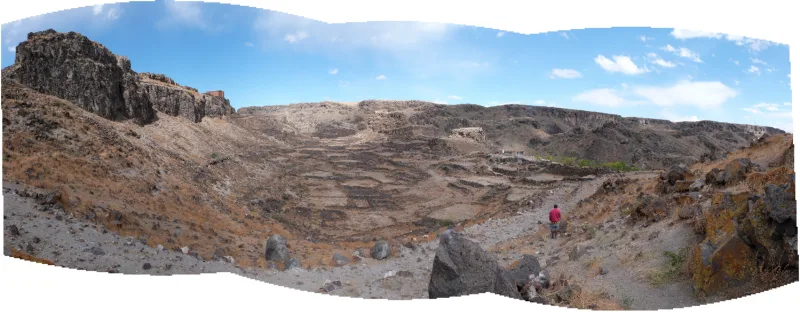
Today, the site of ancient Bagaran is partially occupied by the Kurdish village of Kilittaşı. The area borders the state border with Armenia along the Akhurian River—it is a border zone with restricted access. From the Turkish side, ruined fragments of masonry are visible; on the Armenian side, across the river, lies the modern village of Bagaran. The landscape—open steppe hills, silence, distant mountains—preserves the unique atmosphere of a place where history has been deliberately erased.

Interesting Facts and Legends

  • The 5th-century Armenian historian Movses Khorenatsi referred to Bagaran as a city founded in the 3rd century BCE—one of the oldest known cities in Armenia. This makes it a contemporary of many ancient cities in the Mediterranean.
  • The Church of St. Theodore, completed around 631, was adorned with inscriptions encircling the entire building on the outside—a system of epigraphic decoration unique in Armenian architecture. Historian Joseph Orbelian considered it one of the finest examples of early medieval Armenian architecture.
  • In 885, Bagaran became the capital of the restored Armenian Kingdom under the rule of Ashot I Bagratid. The city retained its capital status for only a few years, after which the court moved to Shirakavan and later to Ani.
  • After the Turkish-Armenian War of 1920, the surviving residents of Bagaran crossed the Akhurian River and founded a new village of the same name 8 km to the south—already on Soviet territory. Thus, “two Bagarans” stand on opposite sides of the border.
  • At the beginning of the 20th century, just over 300 Armenians lived in Bagaran. Today, the Kurdish village of Kilittaşı stands on its ruins—yet another chapter in the centuries-long history of shifting peoples and cultures in this corner of Eastern Anatolia.

How to get there

The ruins of Bagaran are located in Kars Province, in the border zone near the Akhurian River. The nearest major city is Kars (KSY Airport, with flights from Istanbul and Ankara). From Kars to the area of the former Bagaran, it is about 50–60 km southeast along the road toward Ani and then along the border. The easiest way to get there is by rental car.

Important to note: the area borders the state border with Armenia. Visiting requires prior clarification of access regulations—in some border zones of Kars, a special permit from the gendarmerie or the provincial governor is required. It is recommended to consult in advance with travel agencies in Kars or directly with municipal authorities. From Russia, the most convenient option is to fly to Istanbul and then take a domestic flight to Kars or Erzurum.

Tips for Travelers

A trip to Bagaran is a pilgrimage to what has been lost, not classic sightseeing tourism. Come prepared with historical context: read about the Bagratid Kingdom of Armenia, the fate of the Armenian heritage in Kars Province, and the Church of St. Theodore. Otherwise, the open field near the border village will seem like just an open field.

Be sure to check the current access regulations for the border zone before your trip: restrictions may change. We recommend combining your visit with a trip to Ani—the ancient capital of Armenia, located a few dozen kilometers to the north; there, impressive ruins of the medieval city remain, accessible to tourists. Kars also deserves a separate day: the fortress, the Kumbet Mosque (12th century), the historic 19th-century Russian quarter, and the local cheese and honey.

The best time to visit is spring (May–June) and early fall (September). In winter, the roads are covered in snow. Bring water, food, and warm clothes—the weather is unpredictable at the border between the steppe and the mountains. To understand what Bagaran meant to Armenian history, we recommend reading about it in books on medieval Armenia: it is a place you grasp with your mind before you experience it with your eyes.
Your comfort is important to us, click on the desired marker to create a route.
Meeting for minutes before
Yesterday. 17:48
Frequently asked questions — Bagaran—the ancient capital of Armenia in the province of Kars Answers to frequently asked questions about Bagaran—the ancient capital of Armenia in the province of Kars. Information about the service's operation, capabilities, and use.
Bagaran is one of the oldest cities in Armenia, founded in the 3rd century BCE by King Yervand IV of the Orontid dynasty. Throughout history, it served as a spiritual center for pagan cults, and in 885, it became the capital of the restored Armenian Kingdom under Ashot I Bagratid. It was home to temples, royal tombs, and one of the outstanding monuments of early medieval Armenian architecture—the Church of St. Theodore. Today, the city has been virtually destroyed, making it a symbol of lost cultural heritage.
There are virtually no visible architectural landmarks left. The Church of Saint Theodore—the city’s main landmark—was deliberately destroyed in 1920. The ancient city is now the site of the Kurdish village of Kilittaşı. From the Turkish side, one can see isolated fragments of the old masonry, but Bagaran should not be viewed as a classic site with ruins—it is more of a historical landscape than an archaeological site.
The church was built between 624 and 631 and served as the main religious center of Bagaran for over a thousand years. Its distinctive feature was a unique system of epigraphic decoration: inscriptions encircled the entire exterior of the building, extending from the northern end of the western apse around the entire perimeter. Armenian historian Joseph Orbelian considered it one of the finest examples of early medieval Armenian architecture. Until 1920, the church remained largely intact, making its deliberate destruction a particularly acute loss.
Bagaran was founded by Yervand IV of the Orontid dynasty. Under Artashes I, the first king of the Artashevid dynasty, pagan religious objects were moved from Bagaran to the new capital, Artashat. In the 6th century, the city passed to the Kamsarakans, and in the 8th century, to the Bagratids. In 885, Ashot I, the first king of the restored Armenian Kingdom, ruled here. Several Bagratid rulers, including Ashot I, were buried in Bagaran.
Following the Turkish-Armenian War of 1920, the western bank of the Akhurian River came under Turkish control. The surviving residents of the Armenian village of Bagaran crossed the river and founded a new village with the same name—now on Soviet territory, about 8 km south of the historic site. Thus, there are two Bagarans: the historic one—on the Turkish side, now occupied by the village of Kilittaşı—and the modern one—on the Armenian side.
The area borders Armenia along the Akhurian River and is a restricted border zone. In certain districts of Kars Province, a special permit from the gendarmerie or the provincial governor is required. Access regulations may change, so it is necessary to check the current rules before traveling—either at travel agencies in Kars or directly with municipal authorities.
No, Bagaran is not listed as a UNESCO World Heritage Site. Unlike neighboring Ani, which was inscribed on the list in 2016, Bagaran does not have official protected status. In fact, the site has hardly been archaeologically explored, and most of it is hidden beneath modern buildings.
Ani—the ancient medieval capital of Armenia, located a few dozen kilometers north of Bagaran—boasts impressive, well-preserved ruins, tourist infrastructure, and official UNESCO status. Bagaran, on the other hand, offers only scenery and a sense of history: there are almost no visible monuments here. Combining the two sites makes sense and is highly recommended: Ani offers a visual and architectural experience, while Bagaran provides a deep immersion in history through its absence, silence, and borderland context.
This destination is geared toward travelers with a deep interest in history: researchers of Armenian heritage, enthusiasts of “dark tourism” and lost civilizations, photographers seeking a melancholic border landscape, and those who value the place’s depth of meaning over its visual spectacle. For those expecting classic ruins or tourist infrastructure, Bagaran will most likely disappoint.
The best times to visit are spring (May–June) and early fall (September). During these periods, the steppe landscape is at its most striking, the roads are passable, and the weather is pleasant. In winter, Kars Province is covered in snow, and roads may be impassable. In summer, intense heat is possible. The weather in the foothills is changeable in any season, so it’s a good idea to pack warm clothes.
The nearest major historical site is Ani, the ruins of the medieval Armenian capital, located a few dozen kilometers to the north. The city of Kars deserves a full day on its own: it features a medieval fortress, the 12th-century Kumbet Mosque, and a historic 19th-century Russian quarter. Kars is also known for its local cheese and honey. All together, this makes for a rich itinerary through Eastern Anatolia without the need to travel specifically for just one site.
There is no tourist infrastructure: no information kiosks, no viewing platforms, no cafes, and no organized tours. The site is located in the border zone near the Kurdish village of Kilittaşı. Travelers must provide their own food, water, and transportation. Navigating the area will require advance preparation—maps, historical materials, and, preferably, a basic knowledge of Turkish or the assistance of a local guide.
User manual — Bagaran—the ancient capital of Armenia in the province of Kars Bagaran—the ancient capital of Armenia in the province of Kars User Guide with a description of the main functions, features, and principles of use.
Bagaran is a place you grasp with your mind before you take it in with your eyes. Read about the Bagratid Kingdom of Armenia, the fate of the Armenian heritage in the province of Kars, and the Church of St. Theodore. Without this context, the open field near the border village will remain just an open field. Good preparation will make your trip meaningful.
The nearest major city is Kars, which has KSY Airport. There are direct domestic flights from Istanbul and Ankara. From Russia, the most convenient option is to fly to Istanbul and then take a domestic flight to Kars or Erzurum. We recommend setting aside a full day for Kars to explore the fortress, the Kumbet Mosque, the historic district, and the local cuisine.
The Bagaran region borders Armenia and is designated as a restricted-access zone. Be sure to check the current regulations before your trip: in some areas of Kars Province, a special permit from the gendarmerie or the governor is required. Check with travel agencies in Kars or contact the local authorities directly. Restrictions are subject to change.
The easiest way to get to Bagaran is by rental car. It’s about 50–60 km southeast from Kars to the area of the former Bagaran: take the road toward Ani, then follow the border. There is virtually no public transportation in this direction. It is recommended to combine this trip with a visit to Ani—this will save time and provide a full historical context.
There are no shops, cafes, or tourist facilities in the area. Bring plenty of water, food, warm clothing, and a raincoat—the weather in the foothills of Eastern Anatolia is unpredictable even in spring and fall. A fully charged phone with offline maps, a printed permit (if required), and a basic understanding of the route are essential.
The village of Kilittaşı stands on the site of modern-day Bagaran. Please explore the area with care and respect: you are near the state border. From the Turkish side, you can see scattered fragments of masonry. Across the Akhurian River, the Armenian side is visible, with the modern village of Bagaran. The main thing this place offers is the atmosphere and a sense of the scale of the historical loss, rather than specific ruins.
After Bagaran, it makes sense to stop by Ani—just a few dozen kilometers to the north, the impressive ruins of a medieval city have been preserved, complete with tourist facilities. Ani is a UNESCO World Heritage Site and offers a visual experience that Bagaran does not. Together, these two places form a profound journey through the Armenian historical heritage of the Kars province.